When money's tight, your reviews do the selling for you.
Short answer: As households in Australia, the UK, the US, Singapore, and Hong Kong pull back on discretionary spending in 2026 and moving into 2027, consumers are compensating by researching harder before they buy, and reviews are the single most relied on signal they use to decide. For a local business, that shift makes your Google rating less of a "nice to have" and more of the thing standing between a cost-conscious customer and a competitor's door.

Table of contents
The squeeze is global, and it's real
What tighter budgets do to buying behaviour
Why reviews carry more weight when wallets are tight
What this means for your counter
The squeeze is global, and it's real
This isn't a one-market story. Across every region around the world, the data points the same direction: cost of living pressure means consumers have less room to move, and they're spending what they have more carefully.
In Australia, one of the top four banks, National Australia Bank (NAB) released their Q1 2026 Consumer Sentiment Survey, which put its Consumer Stress Index at 59.1, that's the highest reading since 2014.
Rather than cutting spending outright, 57% of Australians switched at least one provider in the past year chasing better value, with supermarkets seeing the highest switching rates of all. Intentions for discretionary purchases such as going out to restaurants and cafes, renovations, major household items, holidays have weakened notably. (NAB, March 2026)
In the United Kingdom (UK), Deloitte's Consumer Tracker for Q1 2026 recorded UK consumer confidence at its lowest since Q3 2023, with spending on non-essentials falling 6.7 percentage points to its lowest point since early 2023.
Nearly a third of UK consumers (29%) now say they're buying only essentials, and close to half report consciously cutting back on what they'd consider a luxury. (Deloitte UK, April 2026)
In the United States (US), McKinsey's State of the US Consumer tracker shows overall "splurge intent" fell 12 percentage points quarter-on-quarter by the end of 2025.
A quarter of respondents dipped into savings to cover everyday costs, a quarter cut food spending, and lower-income households were 13 points more likely to trade down to budget brands than they were earlier in the year. (McKinsey, 2025)
The news is also similar in Southeast Asia, with Singapore's UOB ASEAN Consumer Sentiment Study finding Singapore sitting among the lowest sentiment scores in the region, with 66% of respondents worried about inflation and only 26% saying now is a good time for a major purchase, the lowest figure of any market surveyed. Over half (53%) are now actively hunting for discounts before they buy. (UOB, September 2025)
In Hong Kong, one of the most expensive cities in the world, the picture is more mixed. The Census and Statistics Department's retail figures actually showed a modest 1.8% year-on-year increase in July 2025, but that headline number sits on top of a well-documented shift toward services spending and heavier price comparison, and doesn't capture how carefully that spending is being allocated. (Census and Statistics Department, Hong Kong)
The specifics differ by market, but the pattern correlates to the same narrative: less confidence, more comparison-shopping, and a sharper line between what's essential and what can wait.
What tighter budgets do to buying behaviour
BCG's 2026 study of 13,000+ consumers across 12 markets found that price now sets the shortlist, but value decides the purchase.
Nearly 70% of consumers won't buy something they can afford if they don't believe it's worth it. Therefore, the emphasis on quality has become the baseline expectation, not the differentiator. (BCG, 2026)
Something worth paying attention to: when someone has less to spend, they don't stop wanting quality, they simply spend longer trying to prove they're getting it before they commit. That extra research step is exactly where reviews step in.
Why reviews carry more weight when wallets are tight
A February 2025 Harvard Business Review study, based on 111,728 real purchase reviews and experiments with over 2,000 participants, found that as many as 98% of consumers rely on reviews when deciding what to buy, with many ranking reviews above the product description itself as their top deciding factor. (Jha, Biswas & Ravula, HBR, Feb 2025)
The same research adds a nuance worth knowing: for something bought rarely, for instance a mechanic, a dentist, or a one-off tradesperson, a specific recommendation is what people find most credible.
For something bought often, a coffee run, a regular hairdresser, signals that other people keep coming back matter more.
Either way, the review is doing the trust-building work that a cost-conscious customer used to do by asking around in person.
Put the regional data and the behavioural research together and the logic is straightforward: tighter budgets push people to research harder before they spend, and reviews are the primary tool they research with.
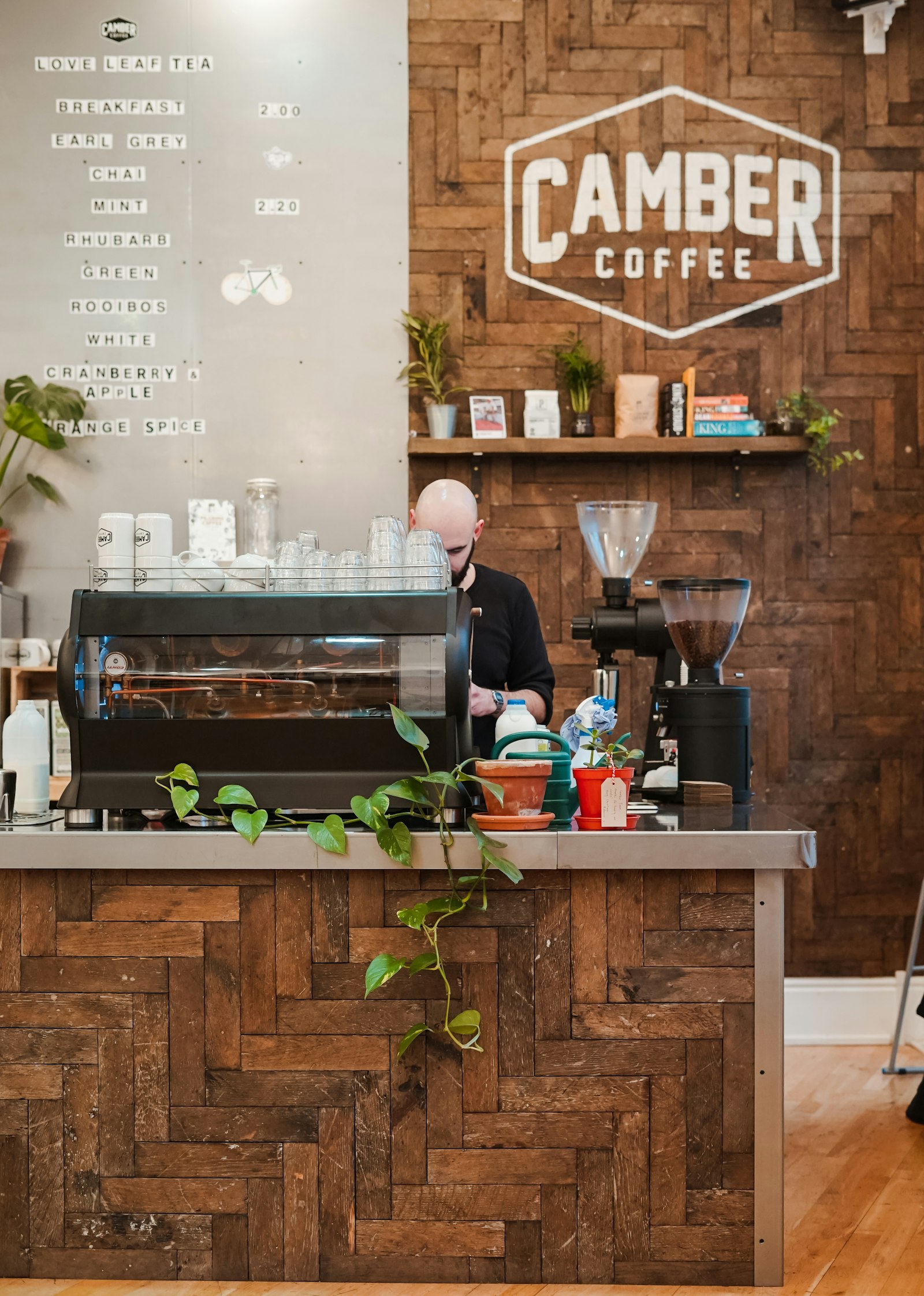
What this means for your counter
None of this means reviews fix a business that isn't actually good, a five-star rating won't save bad coffee or slow service.
What it does mean is that a genuinely good local business now has more to lose by staying invisible to a comparison-shopping customer standing outside deciding whether to walk in. The resurgence of reviews means if you rely on word of mouth, you need to adopt a digital approach to capture and sell.
A Mor Review Plate turns the moment someone's already satisfied, phone in hand and right at your counter, into a five-second tap that adds to the exact signal cost-conscious customers are now leaning on harder than ever.
In a market where people are switching providers, hunting for discounts, and thinking twice before every purchase, being the visibly trusted option is worth more than it was two years ago, not less.